
The ‘Montessori at Home’ Trend: Fostering Toddler Independence Without Opening the Door to High-Reach Hazards
Key Takeaways
The popular Montessori at Home movement uses floor beds and toddler learning towers to encourage independence. However, these climbing structures elevate a child’s vertical reach zone by 24 to 36 inches. This creates high-reach hazards, bringing previously “out-of-reach” window blind cords, unanchored wall shelves, and counter appliances directly into a toddler’s grasp. To keep Montessori spaces safe:
3-Foot Rule
Maintain a 3-foot distance rule between any climbing furniture/towers and windows.
Replace
Replace all corded window treatments with certified “Lab Tested Mom Approved™” cordless blinds.
Verify
Verify that standing towers meet current CPSC tip-over safety standards.
Anchor
Ensure dressers, bookcases, and hanging shelves are anchored to wall studs using heavy-duty anti-tip straps.
Fostering Toddler Independence with a Safety-First Mindset
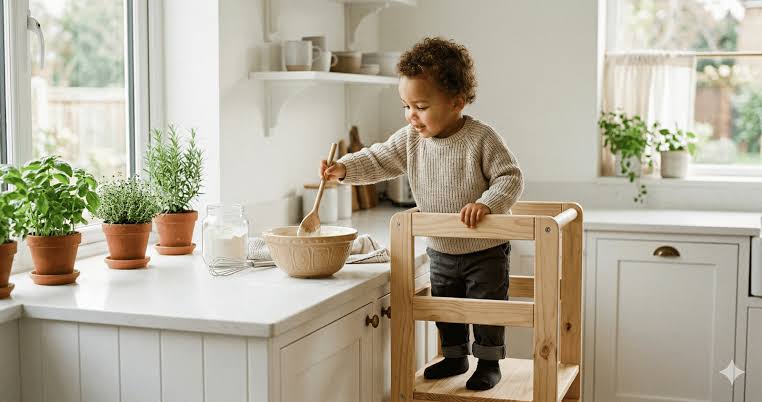
If your social feeds look anything like ours, your timeline is likely filled with aesthetic, neutral-toned nursery spaces inspired by the #MontessoriAtHome movement. From low floor beds that encourage movement autonomy to toddler “learning towers” that bring your little chef right up to counter height, modern parenting in 2026 focuses heavily on confidence-building and early independence.
As parents, we love these functional design shifts. But as child safety advocates, we also know that raising a child’s physical height fundamentally changes the home hazard landscape.
With the U.S. Consumer Product Safety Commission (CPSC) issuing safety alerts and recalls regarding unstable toddler standing towers and fall risks, parents must look closely at two critical factors: structural stability and vertical reach expansion.
1. The High-Reach Hazard: Understanding Vertical Reach Expansion
Standard childproofing focuses on low-level threats: floor outlet plugs, cabinet latches, and sharp coffee table edges. However, when you introduce a toddler standing tower, climbing triangle, or low-profile floor bed, your child’s standing reach increases by 2 to 3 feet.
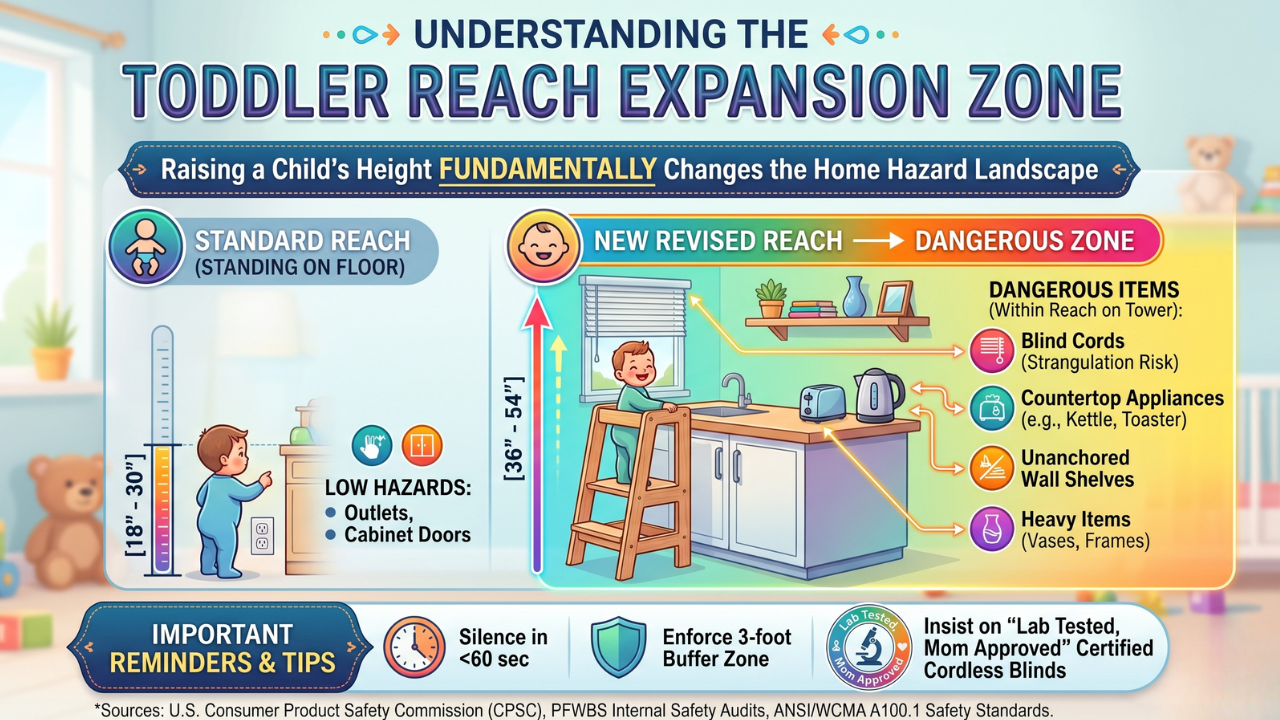
When a toddler ascends a platform, items previously thought to be “out of reach” enter the danger zone:
- Kitchen Counter Appliances: Crockpots, air fryers, and electric kettle cords can be pulled down by a child standing in an elevated tower.
- Unanchored Wall Decor: Floating shelves, heavy ceramic artwork, or mirrors mounted at adult eye level become accessible pull risks.
- Window Sills & Treatments: Windows that once sat far above a crawling baby are now at chest height for an elevated toddler.
2. How Climbing Accessories Turn Window Cords Into Critical Threats
One of the most frequent safety oversights in modern nurseries and playrooms involves window placement.
Many parents assume that wrapping or tying outdated window blind cords at adult waist height (around 4 to 5 feet off the floor) keeps them safe. However, when a child drags a Montessori play couch, floor cushion, or learning tower over to a window, that “out-of-reach” cord rests directly at neck height.
Crucial Fact: Window covering cords remain one of the leading hidden hazards in American homes. Strangulation from a dangling window cord is silent and can occur in under 60 seconds—even when an adult is in the same room.
While federal safety standards (ANSI/WCMA A100.1) require most newly manufactured window coverings sold in the U.S. to be cordless or have inaccessible cords, millions of older homes and rental properties still contain legacy corded blinds.
3. The 4-Step Montessori Room Safety Audit
To build a true Montessori environment—where a child can explore freely without encountering hidden dangers—follow this 4-step room audit:
1. Enforce the 3-Foot Window Buffer
Keep all toddler learning towers, play couches, floor beds, and climbing structures at least 3 feet away from any window. Never position a climbing structure directly underneath or next to a window sill.
2. Upgrade to Certified Cordless Window Coverings
Replacing old corded blinds with cordless shades eliminates the strangulation hazard entirely. Look specifically for window treatments tested and certified with the “Lab Tested Mom Approved” label.
3. Inspect & Verify Toddler Standing Towers
Before purchasing or using a learning tower:
- Verify that it has not been flagged under recent CPSC recall alerts for tip-overs or guardrail entrapment.
- Choose models with wide, non-slip base stabilizers.
- Always maintain active supervision while your child uses an elevated tower.
- Check Consumer Reports and see what they have tested.
4. Wall-Anchor All Elevated Furniture
Ensure dressers, bookcases, and hanging shelves are anchored to wall studs using heavy-duty anti-tip straps. Toddlers naturally use furniture shelves as footholds when trying to reach higher objects.
Frequently Asked Questions
True Independence Requires an Inaccessible Hazard Zone
The heart of Montessori philosophy is creating a “prepared environment”—a space where toddlers can explore independently without being surrounded by constant warnings. By removing corded window treatments and managing elevated reach zones, you give your child the freedom to learn, climb, and grow safely.
Parents for Window Blind Safety (PFWBS) is dedicated to educating families and testing window covering products for child safety standard compliance. Need assistance evaluating your home’s window safety? Visit our Resource Center to viewchild safety tips and safety testing guides.